

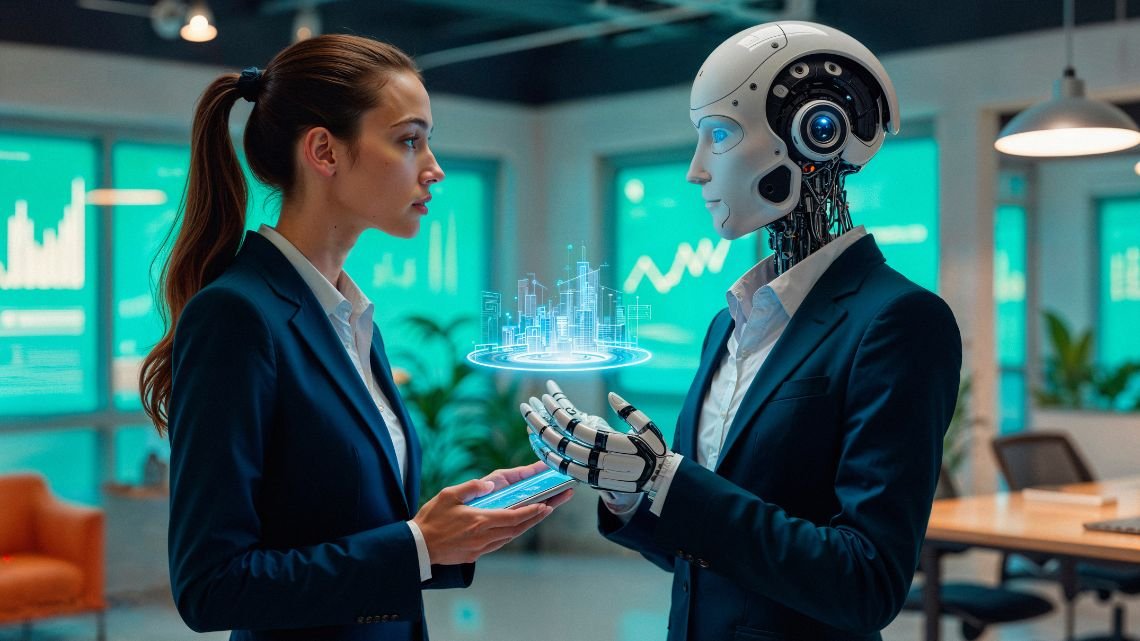
The world of entrepreneurship is rapidly evolving as artificial intelligence becomes one of the most powerful tools helping startups, creators, and online business owners build companies faster than ever before. In 2026, young entrepreneurs worldwide are increasingly relying on AI-powered tools to automate operations, create digital products, improve marketing strategies, and scale businesses with lower startup costs.
Experts say the rise of artificial intelligence is transforming the traditional startup model. In the past, building a business often required large teams, expensive infrastructure, and significant financial investment. Today, many entrepreneurs can launch online businesses with minimal resources using AI-driven platforms for content creation, customer service, automation, coding, advertising, and market analysis.
One of the biggest reasons AI is becoming popular among entrepreneurs is efficiency. Business owners are now using AI systems to generate marketing content, manage customer interactions, analyze consumer behavior, create branding materials, and even assist with software development. This allows startups to move faster while reducing operational expenses.
Digital entrepreneurship continues expanding globally as remote work and internet accessibility increase. Online stores, freelance services, digital agencies, subscription platforms, content creation businesses, and software startups are among the fastest-growing business categories worldwide. Many entrepreneurs are choosing online-first business models because they offer flexibility, scalability, and access to international markets.
The creator economy is also playing a major role in shaping modern entrepreneurship. Social media platforms including YouTube, TikTok, Instagram, LinkedIn, and X have created opportunities for individuals to monetize personal brands, digital skills, and online communities. Content creators are increasingly turning into entrepreneurs by launching courses, memberships, merchandise, consulting services, and digital products.
Experts believe artificial intelligence is accelerating the growth of the creator economy by helping creators produce content more efficiently. AI-powered editing tools, writing assistants, image generators, and automated social media systems are allowing entrepreneurs to manage multiple platforms and audiences with smaller teams.
Personal branding has become one of the most important business strategies for modern entrepreneurs. Many startup founders are building visibility through LinkedIn posts, podcasts, YouTube videos, and thought leadership content. Analysts say audiences are more likely to trust businesses connected to authentic personal stories and visible founders.
E-commerce remains another major area of entrepreneurial growth. Online shopping continues expanding globally as businesses use social media marketing, influencer partnerships, AI-driven recommendations, and digital advertising to reach customers faster. Entrepreneurs are increasingly focusing on niche markets, direct-to-consumer brands, and subscription-based business models.
Financial technology is also making entrepreneurship more accessible. Digital payment systems, online banking, crowdfunding platforms, and cryptocurrency-based solutions are simplifying how businesses receive payments, manage operations, and access funding. Small businesses now have access to tools that were previously available mainly to large corporations.
Meanwhile, startup competition continues increasing as more individuals enter the digital business space. Experts say innovation, branding, audience trust, and adaptability are becoming critical factors for long-term success. Entrepreneurs who understand market trends and rapidly adapt to technological changes are more likely to succeed in competitive industries.
Despite the opportunities, challenges remain for startup founders worldwide. Economic uncertainty, market saturation, cybersecurity risks, and rapidly changing algorithms on digital platforms continue affecting online businesses. Entrepreneurs must continuously update skills, monitor industry trends, and improve digital strategies to remain competitive.
Mental wellness and work-life balance are also becoming important topics within entrepreneurship communities. Many founders are discussing burnout, productivity pressure, and the emotional challenges of building businesses in highly competitive digital environments. Experts encourage entrepreneurs to focus on sustainable growth rather than constant expansion without balance.
Artificial intelligence itself is expected to create entirely new business categories over the next decade. Analysts predict future opportunities in AI consulting, automation services, cybersecurity, virtual assistants, digital education, personalized marketing, and AI-powered software solutions.
Investment interest in startups remains strong despite economic fluctuations. Venture capital firms and private investors continue supporting innovative businesses focused on artificial intelligence, clean technology, digital finance, health technology, and online services.
Experts believe the future of entrepreneurship will become increasingly digital, automated, and globally connected. Technology is reducing traditional barriers to entry, allowing individuals from different countries and backgrounds to build scalable online businesses with fewer limitations than ever before.
As artificial intelligence and digital platforms continue evolving, entrepreneurs worldwide are entering a new era where innovation, adaptability, and technology-driven strategies are shaping the future of business growth and financial success.
