




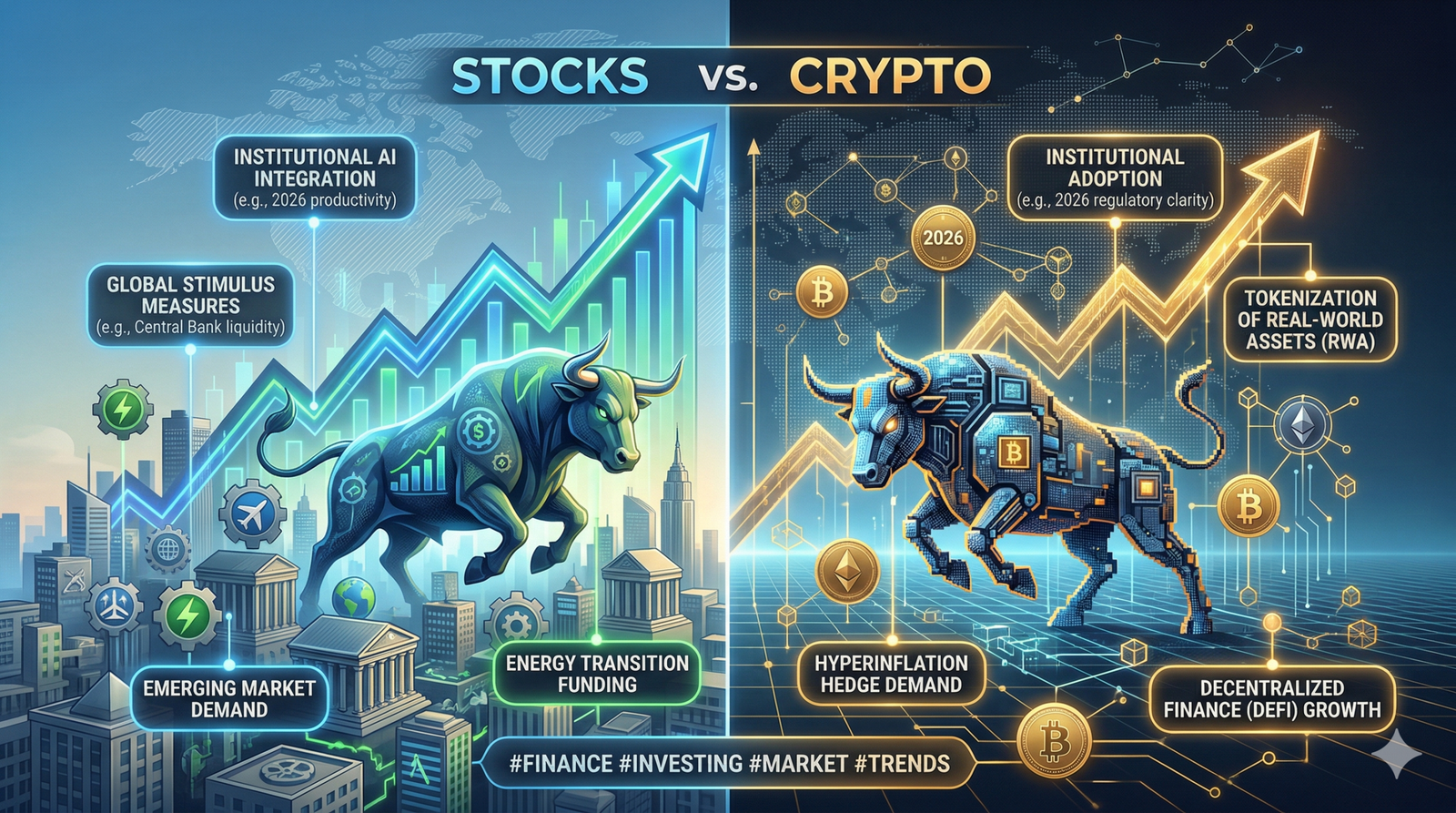
Global financial markets are continuing to experience significant volatility as investors closely monitor cryptocurrency prices, inflation concerns, interest rate decisions, and economic uncertainty across major economies. Bitcoin, Ethereum, and other digital assets remain under intense market pressure while traditional financial markets also react to changing global economic conditions.
Over the past several months, cryptocurrencies have experienced rapid price fluctuations driven by investor sentiment, government regulations, institutional adoption, and broader economic developments. Bitcoin, the world’s largest cryptocurrency, continues attracting both strong investor interest and growing skepticism as analysts debate the future direction of digital assets.
Financial experts say one of the major reasons behind current market instability is uncertainty surrounding global interest rates and inflation. Central banks in several countries are maintaining cautious monetary policies while attempting to balance economic growth with inflation control. Investors are carefully analyzing economic data, employment reports, and financial policy updates to predict future market movements.
The cryptocurrency market has become increasingly connected to the global financial system. In previous years, crypto markets often moved independently from traditional stocks and commodities. However, analysts now observe stronger correlations between digital assets, technology stocks, and global investor confidence.
Institutional investment continues playing a major role in shaping cryptocurrency markets. Large financial firms, hedge funds, and investment companies are increasingly participating in the digital asset sector despite ongoing volatility. Some institutions view cryptocurrencies as long-term investment opportunities, while others remain cautious due to regulatory uncertainty and market risks.
Governments worldwide are also increasing discussions around cryptocurrency regulation. Financial regulators are focusing on digital asset security, anti-money laundering compliance, taxation policies, and investor protection measures. Experts believe clearer regulations could either strengthen investor confidence or place additional pressure on the crypto industry depending on how policies are implemented.
At the same time, traditional financial markets are facing their own challenges. Stock markets across multiple countries continue reacting to inflation reports, geopolitical developments, energy prices, and global trade conditions. Investors are becoming more cautious as economic uncertainty affects both short-term trading and long-term investment strategies.
Gold and oil prices are also drawing significant market attention. Gold remains a popular safe-haven asset during periods of uncertainty, while oil markets continue fluctuating due to supply concerns, production decisions, and international demand changes. Analysts say commodity markets could remain unstable throughout 2026 if global economic pressures continue increasing.
Artificial intelligence is becoming another important factor influencing the financial industry. AI-powered trading systems, automated market analysis tools, and predictive algorithms are rapidly changing how investors approach trading and investment decisions. Financial technology companies are investing heavily in AI-driven platforms designed to improve speed, efficiency, and data analysis capabilities.
Meanwhile, retail investors continue participating actively in financial markets through mobile trading apps and digital investment platforms. The accessibility of online investing has allowed millions of people worldwide to trade cryptocurrencies, stocks, and commodities directly from their smartphones. Experts say this digital transformation has increased market participation but has also contributed to faster market reactions and volatility.
Cybersecurity concerns are also rising within the financial sector. As digital banking, online trading, and cryptocurrency usage continue growing, financial institutions are strengthening security systems to protect against hacking attempts, fraud, and cyberattacks. Security experts warn that financial cybercrime remains one of the biggest risks facing the global digital economy.
Despite market uncertainty, many investors remain optimistic about long-term financial growth opportunities. Analysts believe sectors such as artificial intelligence, clean energy, digital finance, and advanced technology could continue attracting major investment interest over the coming years.
Financial experts predict that global markets may remain volatile throughout 2026 as investors navigate inflation pressures, technological disruption, geopolitical developments, and rapid digital transformation. However, they also believe innovation and global market expansion will continue creating new opportunities for businesses, investors, and financial institutions worldwide.
As global finance evolves, investors are increasingly focusing on diversification, technology-driven solutions, and long-term strategies to manage risks in a rapidly changing economic environment.


